
 Apartments
 Villas
 Townhouses
 Penthouses
 Commercial
 See All Properties
Signature Collection
Explore Signature Commercial
 Property Management
 List Your Property
 Mortgages
 Conveyancing
 Short Term Rentals
 Property Snagging
 Partner Program
 Currency Exchange
 PRYPCO
 Ethnovate
 Plots
Plots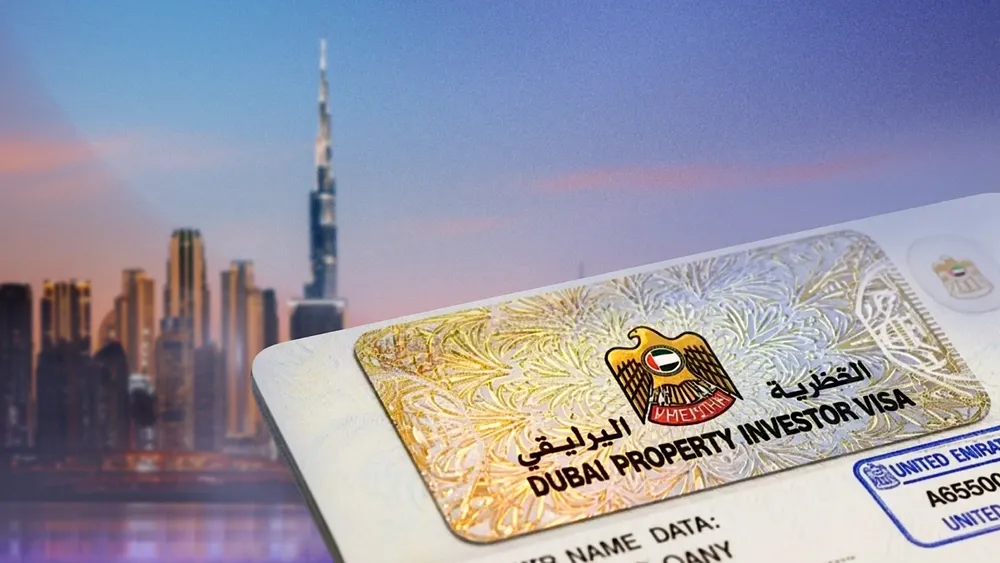
Dubai’s real estate market has long attracted international investors—not only for its strong returns, but also for the lifestyle and residency advantages that come with owning property in one of the world’s most dynamic cities.
One of the key drivers behind this appeal has always been the opportunity to secure UAE residency through real estate investment. With recent updates, the two-year investor residency visa has become more accessible, further reinforcing Dubai’s position as a global investment hub.
This article outlines what has changed, who qualifies, and what investors should consider.
Note: Visa policies in the UAE are subject to change through official government authorities such as the ICA, GDRFA, and the Dubai Land Department. The information in this article is based on updates by Cube Center, an entity affiliated with DLD.
What Is the Dubai Two-Year Property Investor Visa?
The UAE offers foreign nationals a structured pathway to residency through property ownership. The two-year investor visa is widely regarded as the most accessible option, especially when compared to longer-term residency routes such as the Golden Visa.
Through this scheme, investors who purchase qualifying real estate in Dubai can obtain a renewable two-year residency visa. This provides the ability to live in the UAE, travel freely, and access essential services such as banking and healthcare, while also allowing family sponsorship under certain conditions.
The visa is issued by the General Directorate of Residency and Foreigners Affairs, with property verification handled by the Dubai Land Department.
What Changed: A More Accessible Entry Point
Recent updates have introduced greater flexibility into the qualification criteria, making it easier for a wider pool of investors to enter the market.
Previously, a minimum investment of AED 750,000 was required to qualify for the two-year residency visa. Under the updated framework, this threshold has been relaxed in certain cases.
For sole ownership, investors may now qualify even without meeting the previous AED 750,000 benchmark, particularly when the property is fully owned without financing. In cases of joint ownership, the requirement has been adjusted to a minimum contribution of AED 400,000 per investor.
It is important to note that eligibility is assessed based on the original purchase price of the property, rather than its current market value or any remaining mortgage balance. This distinction plays a key role in determining qualification.


Your Property, Our Priority
Dubai's Trusted Property Managers
Maximize returns with our efficient, expert property care.
Who Qualifies Under the Updated Framework?
Eligibility continues to revolve around ownership of a completed residential property in Dubai that is properly registered with the Dubai Land Department.
While the process remains structured, there is now greater flexibility in how investment thresholds are interpreted. Properties that are fully paid tend to offer a more straightforward pathway, while mortgaged assets may still qualify depending on the level of equity and supporting documentation provided by the bank.
In all cases, documentation such as the title deed, passport copy, and valid health insurance forms part of the standard application process.

Why This Matters for Investors
This adjustment is more than a regulatory update—it reflects a broader shift in Dubai’s real estate strategy.
By lowering the entry barrier, the city is opening its doors to a wider segment of international investors. For those looking to establish a base in Dubai, the ability to secure residency through property ownership adds a strategic layer to what is already considered a high-performing market.
At the same time, the framework maintains a level of structure and oversight through entities such as the Federal Authority for Identity, Citizenship, Customs and Port Security and GDRFA, ensuring that investor pathways remain credible and aligned with long-term market stability.
Key Considerations Before Applying
Despite the increased accessibility, investors should approach this opportunity with a clear understanding of how qualification works.
Property type remains an important factor, as not all assets automatically meet eligibility criteria. Ownership structure must also be clearly defined, particularly in joint investments where individual contributions determine qualification.
Equally important is staying aligned with the latest regulatory updates, as visa frameworks in the UAE continue to evolve in response to broader economic strategies.
Working with experienced advisors can help navigate these nuances and ensure a smoother process from acquisition to visa issuance.
FAQs
Under the latest updates, joint ownership requires a minimum contribution of AED 400,000 per investor, while sole ownership may qualify under more flexible conditions if the property is fully owned.
Yes, although approval depends on the amount of equity paid and typically requires a No Objection Certificate from the bank.
In most cases, completed properties are preferred. However, certain off-plan investments may be considered depending on payment progress and approvals.
Celebrities invest in Dubai due to its luxurious lifestyle, privacy laws, tax-free benefits, and world-class real estate offerings.
Explore available projects:
https://providentestate.com/new-projects/
Yes, the visa allows investors to sponsor immediate family members, including a spouse and children, subject to standard requirements.
The visa is issued for two years and can be renewed as long as the qualifying property ownership is maintained.
For more information, get in touch with us at Provident