
 Apartments
 Villas
 Townhouses
 Penthouses
 Commercial
 See All Properties
Signature Collection
Explore Signature Commercial
 Property Management
 List Your Property
 Mortgages
 Conveyancing
 Short Term Rentals
 Property Snagging
 Partner Program
 Currency Exchange
 PRYPCO
 Ethnovate
 Plots
One of the world's best-known trading platforms has just planted its flag in Dubai, and its chosen address says as much about the city's ambitions as it does about the company's. The announcement reaches well beyond the trading floor, into regulatory offices and, increasingly, into the property market that surrounds the Gulf's financial epicentre.
Robinhood Secures a DIFC Licence
Robinhood has selected the Dubai International Financial Centre (DIFC) for its Middle East debut, with a retail investing platform targeted to launch in 2027. The move follows authorisation from the Dubai Financial Services Authority (DFSA), granted on 22nd October 2026, according to WAM.
Vlad Tenev, Robinhood's Chairman and CEO, called the DIFC "one of the world's most important financial hubs" when announcing the firm's new regional headquarters there. The licence allows Robinhood to operate from the DIFC in Dubai and bring commission-free trading directly to investors across the region. Salah Kaddoura has been named President of Robinhood MENA, leading the regional team as the firm builds out its DIFC operation ahead of the 2027 rollout.
A Competitive Field Already in Place
The DFSA authorisation covers trading and custody across all 10 approved asset classes, including equities, crypto, ETFs, and investment tokens, giving Robinhood a broad mandate as it positions the DIFC as the region's retail investing hub.
Robinhood will not have that field to itself, however. Homegrown platforms such as Sarwa, Thndr, and Baraka, together with trading apps run by UAE banks, already hold local licences, established customer bases, and a first-mover advantage in the region. Whether a global brand can win over a market where local players got there first is the open question hanging over Robinhood's 2027 timeline, and one that will shape how quickly the firm's DIFC presence translates into the office and residential demand discussed below.
Why Robinhood Chose the DIFC
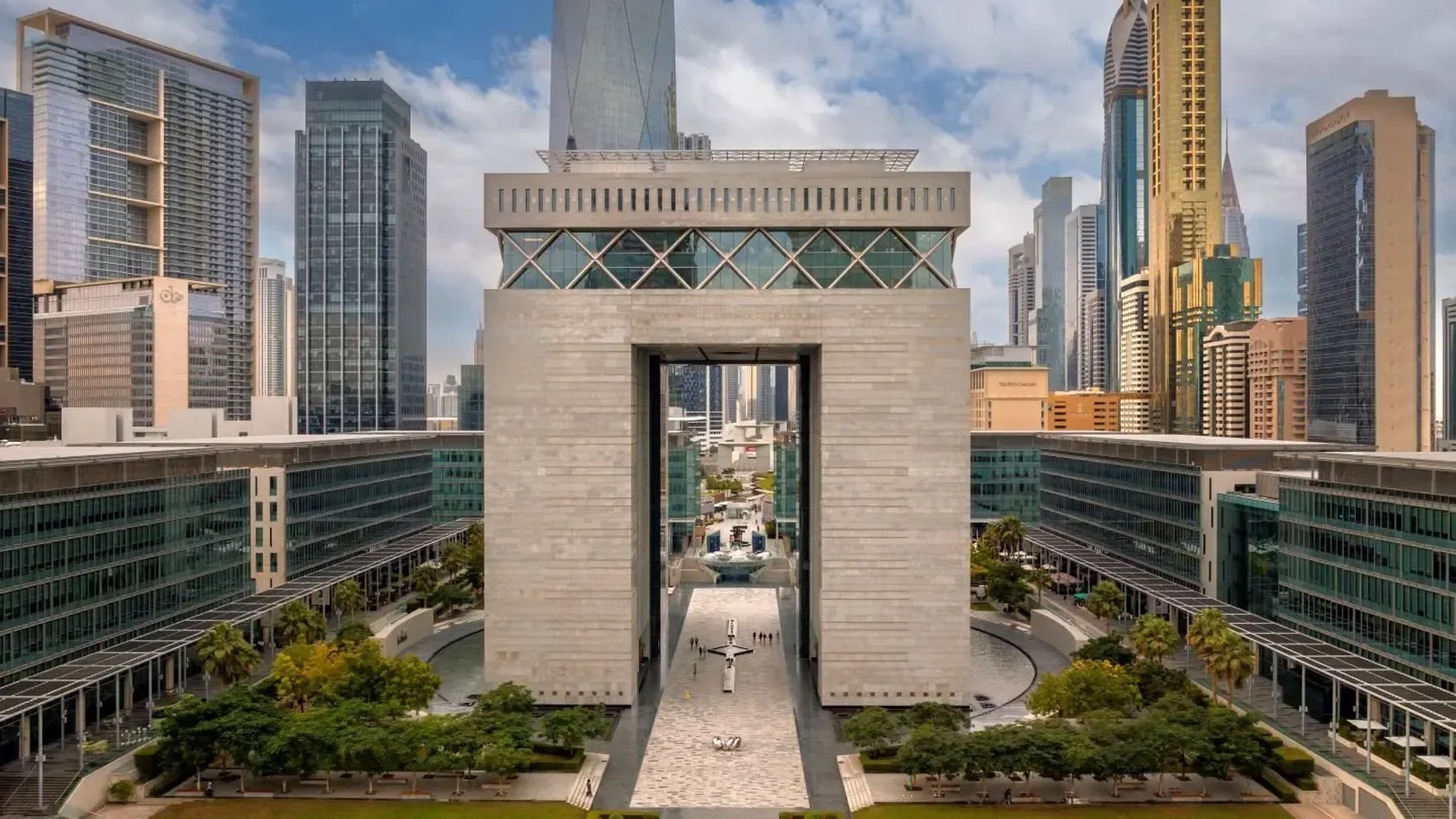
The DIFC in Dubai operates as an independent jurisdiction with its own legal framework, courts, and financial regulator, a structure that has drawn a growing roster of global institutions to base their Middle East operations there. The Dubai International Financial Centre offers a common-law framework, zero currency restrictions, full foreign ownership, and a talent pool spanning more than 45 languages.
Its regulatory standards mirror those in London and New York, reducing friction for firms expanding into emerging markets across Asia, Africa, and the Middle East. For Robinhood, that combination of regulatory clarity and global connectivity made the Dubai DIFC the natural base for its first Middle East operation.
Real Estate Impact: What the DIFC Expansion Means for Dubai Property
A high-profile licence like this one rarely stays contained to a trading app. It signals confidence in the district, and that confidence translates directly into housing and office requirements as firms and their staff arrive.
DIFC Office Space Feels the Pull First
DIFC office space is the asset class most directly exposed to an announcement like this. Premium Grade A offices inside the district already command top-tier rents, and demand typically spills into adjacent areas such as Business Bay and Downtown Dubai as institutions outgrow their first premises. Robinhood's arrival adds to a roster of global firms selecting the DIFC for Middle Eastern operations, each one tightening an already limited vacancy.
Provident Estate, a Dubai-licensed brokerage established in 2008, provides leasing services for investors and occupiers evaluating commercial premises in the district, advising on location, floor-plate efficiency, and lease structure before capital commits. The agency also supports commercial landlords with property management covering tenant relations, maintenance coordination, and financial reporting, work that protects rental income across lease cycles.
FAQs
Robinhood is targeting a 2027 launch for its retail investing platform in the Dubai International Financial Centre (DIFC), following authorisation from the Dubai Financial Services Authority (DFSA) on 22nd October 2026.
The DFSA authorisation covers trading and custody across all 10 approved asset classes, including equities, crypto, ETFs, and investment tokens, giving Robinhood a mandate to offer a consolidated entry point to global markets from its new DIFC base.
The DIFC operates as an independent jurisdiction with its own common-law framework, courts, and financial regulator, zero currency restrictions, full foreign ownership, and regulatory standards that mirror London and New York, making it a natural base for firms expanding into the Middle East, Asia, and Africa.
Salah Kaddoura has been named President of Robinhood MENA. He is leading the regional team as the firm builds out its DIFC operation ahead of the 2027 rollout.
Robinhood enters a market where homegrown platforms such as Sarwa, Thndr, and Baraka, together with trading apps run by UAE banks, already hold local licences and established customer bases. These incumbents give Robinhood a competitive field rather than an open run at the market.
A licence of this profile tends to translate into real occupier demand. As Robinhood and similarly high-profile firms establish their regional headquarters in the DIFC, pressure builds on Premium Grade A office space in the district, with spillover demand reaching adjacent areas such as Business Bay and Downtown Dubai.
Yes. Robinhood's Middle East platform operates under authorisation from the Dubai Financial Services Authority (DFSA), the independent regulator overseeing financial services conducted within the DIFC.
For more information, get in touch with us at Provident