
 Apartments
 Villas
 Townhouses
 Penthouses
 Commercial
 See All Properties
Signature Collection
Explore Signature Commercial
 Property Management
 List Your Property
 Mortgages
 Conveyancing
 Short Term Rentals
 Property Snagging
 Partner Program
 Currency Exchange
 PRYPCO
 Ethnovate
 Plots
Plots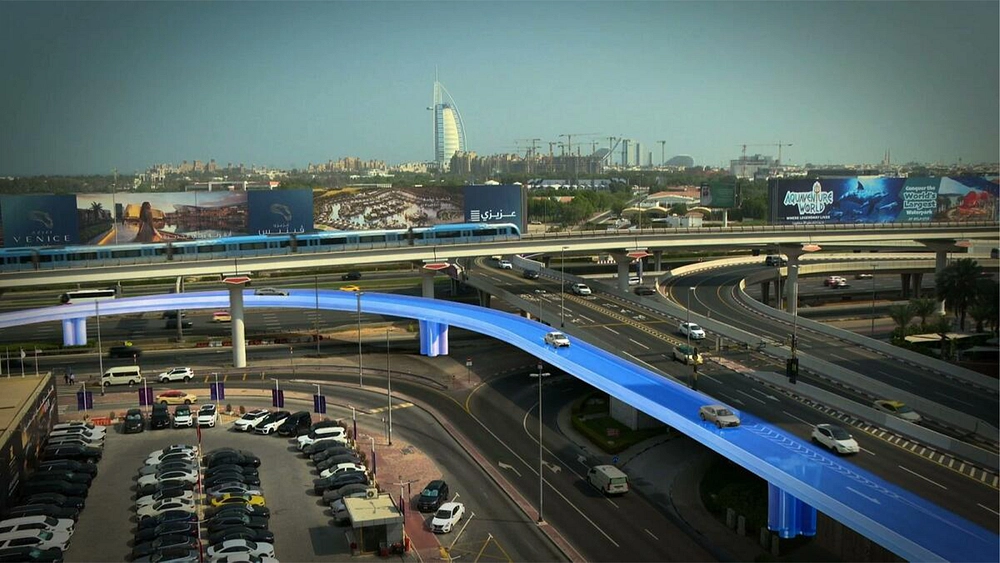
As the city evolves, so must its infrastructure. In the heart of urban expansion, a groundbreaking project is set to redefine connectivity between two major developments in Dubai. The Dubai Harbour access road project, developed in partnership between the Roads and Transport Authority (RTA) and Shamal Holding, is now in its final stage of construction, with completion expected in August 2026.
This article covers the latest update on the Dubai Harbour bridge, including its cost, progress, design specifications, and the impact it is expected to have on commute times and connectivity across the city.
Key Insights
- The Dubai Harbour new bridge spans 1.5 km and includes two lanes in each direction.
- Construction has reached 85% completion, with an official opening expected in August 2026.
- The total project cost is AED 431 million, delivered in collaboration between RTA and Shamal Holding.
- Travel time between Sheikh Zayed Road and Dubai Harbour is expected to drop from 12 minutes to just 3 minutes.
- The bridge is designed to handle up to 6,000 vehicles per hour, easing traffic across Dubai Marina and Dubai Media City.
- Four key intersections along the corridor will receive at-grade improvements as part of the project.

What is the New Dubai Harbour Bridge Project?
The Dubai Harbour bridge is one of the most significant Dubai infrastructure projects currently under construction on the city's western waterfront. The project was launched under the supervision of His Highness Sheikh Hamdan Bin Mohammed Bin Rashid Al Maktoum, Crown Prince of Dubai and Chairman of the Executive Council.
The bridge will provide direct access between Interchange 5 on Sheikh Zayed Road and Dubai Harbour Street, eliminating the need for drivers to navigate through arterial routes in Dubai Marina and Dubai Media City.
The Sheikh Zayed Road Dubai Harbour bridge represents one of several RTA bridge projects in Dubai aimed at supporting the rapid pace of waterfront development across the city.
How Long is the Dubai Harbour Bridge?
The Dubai Harbour bridge is 1.5 km long and consists of two lanes in each direction, giving it a total capacity of approximately 6,000 vehicles per hour. The structure has been engineered to support sustained traffic volumes during peak hours, with the design accommodating both daily commuters and visitors traveling to the marina district.
Which Roads Connect to Dubai Harbour Through the New Bridge?
The Dubai Harbour access upgrade involves a continuous corridor that runs from Sheikh Zayed Road to Dubai Harbour Street. The bridge passes through several key intersections along the way.
RTA’s AED 165 Million Project
RTA, in partnership with Majid Al Futtaim Group, has awarded a contract for a significant infrastructure upgrade aimed at improving access to the Mall of the Emirate. The project, which will cost approximately AED 165 million, focuses on widening and enhancing the entrances to the mall, as well as upgrading the surrounding streets and intersections. The development will also benefit pedestrians and cyclists, with more lanes and pathways.
A key highlight of the project is the construction of a new 300-meter bridge on Sheikh Zayed Road. This single-lane Sheikh Zayed Road bridge will provide direct access to the Mall of the Emirates parking lots for motorists traveling from Abu Dhabi and Jebel Ali. The existing ramp at the Umm Suqeim intersection will also be widened to facilitate smoother vehicle movement from Umm Suqeim Street to the mall's parking lots.
Mattar Al Tayer, Director General and Chairman of the Board of Executive Directors of the RTA, stated, “The project involves the construction of a 300-metre bridge on Sheikh Zayed Road with a single lane, providing direct access to the Mall of the Emirates parking lots for motorists coming from Abu Dhabi and Jebel Ali. Additionally, the current ramp at Umm Suqeim intersection will be widened southward by improving the intersection to facilitate the movement of vehicles from Umm Suqeim Street to the existing bridge leading to the mall's parking lots."
Additional Improvements
The new Dubai bridge construction also includes a range of other improvements:
- Enhancing 2.5 km of surface roads around the mall.
- Developing three signalized surface intersections.
- Modifying the bus station at the Mall of the Emirates Metro Station.
- Converting the street next to Kempinski Hotel from one-way to two-way.
- Enhancing pedestrian and cycling lanes.
Al Tayer added, "These improvements also cover paving, lighting, traffic signals, rainwater drainage system, and landscaping works. The project will significantly reduce travel time for traffic coming from Abu Dhabi and Jebel Ali to the Mall of the Emirates, cutting it from 10 minutes to just one minute. It will also reduce the travel time for motorists coming from Umm Suqeim from 15 minutes to 8 minutes, thereby enhancing traffic efficiency and safety on the roads surrounding the Mall."
Benefits of Mall of the Emirates New Bridge
With the new Sheikh Zayed Road bridge, the Mall of the Emirates will continue to stand out as a key destination for both residents and tourists, offering unparalleled convenience and luxury. Opened in 2005, Mall of the Emirates has become one of Dubai's top shopping and entertainment hubs, attracting over 40 million visitors each year.
Moreover, the construction of the Mall of the Emirates new bridge is a transformative addition to the area around the retail destination. The accessibility is likely to attract increased interest from investors and homebuyers, keen to take advantage of the added convenience and connectivity. Dubai's real estate market is already experiencing significant upward growth, with record sales transactions being reported, as per Provident's Market Report for H1 2024.
Upon completion, the neighborhoods like Al Barsha and Al Sufouh, are anticipated to experience increased real estate activity, further establishing them as prime areas for residential and commercial properties in Dubai.
The development is part of a broader effort to future-proof Sheikh Zayed Road infrastructure. In 2024, His Highness Sheikh Mohammed had also announced a AED 30-billion rain drainage network to further boost the city’s resilience and functionality. Major infrastructure enhancements like these will support the city's growth as a global center for business, tourism, and residence.
FAQs
The Mall of the Emirates new bridge is expected to reduce travel time for traffic coming from Abu Dhabi and Jebel Ali, cutting it from 10 minutes to just one minute.
The timeline for the completion of the road project has not been specified by the authorities yet.
Yes, the Mall of the Emirates is directly connected to the Mall of the Emirates Metro Station via a pedestrian bridge.
For more information, get in touch with us at Provident