
 Apartments
 Villas
 Townhouses
 Penthouses
 Commercial
 See All Properties
Signature Collection
Explore Signature Commercial
 Property Management
 List Your Property
 Mortgages
 Conveyancing
 Short Term Rentals
 Property Snagging
 Partner Program
 Currency Exchange
 PRYPCO
 Ethnovate
 Plots
Plots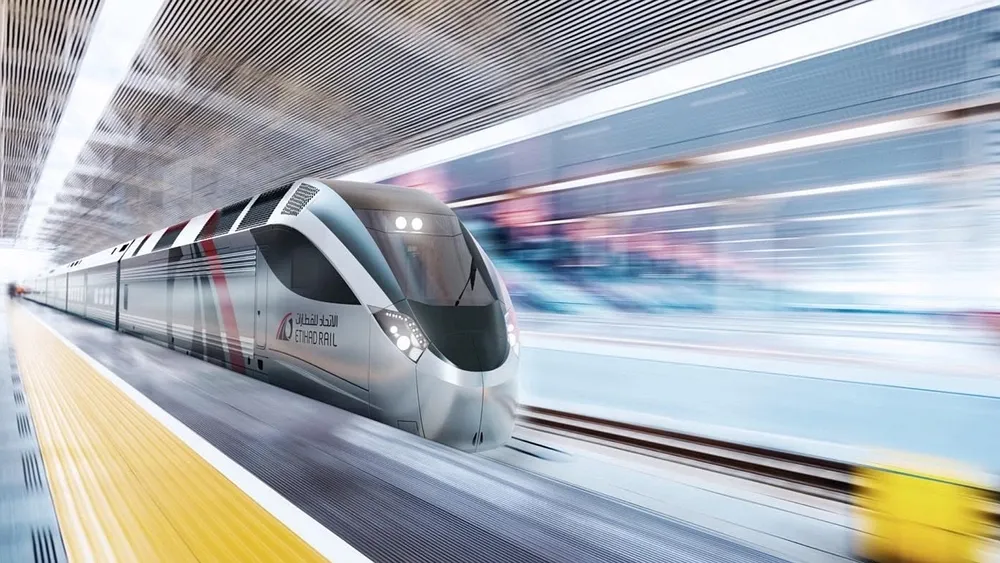
Etihad Rail, the United Arab Emirates’ first national railway network, is preparing to welcome its first public passengers in 2026 as key routes between Abu Dhabi, Dubai, and Fujairah move into operation. Designed to connect all seven emirates and eventually integrate with the wider GCC corridor, the 900-kilometer network has now entered its final pre-launch phase.
Following a series of Etihad Rail's latest updates, authorities have confirmed details surrounding station locations, journey times, launch routes, onboard services, and ticketing. Here is everything you need to know.
What Is Etihad Rail?
Etihad Rail is the UAE’s 900-kilometer national railway network, strategically engineered to connect all seven emirates from Al Sila at the Saudi border to Fujairah on the east coast.
Approved in 2009, the project is owned 70% by the Abu Dhabi government and 30% by the federal UAE government. What began as a freight-focused initiative has evolved into one of the most ambitious passenger mobility systems in the region.
The railway forms a critical logistics and passenger corridor linking ports, industrial zones, residential communities, and economic centers. Once fully operational, the passenger train Etihad Rail system is expected to carry 36.5 million passengers annually by 2030. This positions rail as a viable alternative to domestic flights and long road journeys.
Etihad Rail is designed with regional expansion in mind. The Hafeet Rail link between Abu Dhabi and Sohar in Oman is under construction and is expected to significantly reduce travel times between the two countries. At the western end, Al Sila provides the groundwork for future rail connectivity into Saudi Arabia. In the long term, Etihad Rail may integrate into the broader GCC railway network, enabling multi-country rail travel across the Arabian Peninsula.
Etihad Rail Latest Updates: Countdown to Passenger Launch
The Etihad Rail’s latest updates confirm that phased passenger services will begin rolling out in 2026. The first operational spine will connect Abu Dhabi, Dubai, and Fujairah, forming the backbone of the national network. Additional stations and routes will follow progressively rather than launching simultaneously.
Freight operations are already fully active, transporting up to 60 million tonnes of cargo annually using 38 locomotives and more than 1,000 multipurpose wagons. With the freight backbone complete, the focus has shifted to passenger readiness. Station construction, digital ticketing systems, and service integration are now in advanced stages.

When Will Etihad Rail Open for Passengers?
Authorities have confirmed that 2026 marks the beginning of phased passenger operations. However, an exact public booking date has not yet been officially released.
If you’re wondering on which date the Etihad Rail passenger train starts? While a precise launch day has not been published, the Abu Dhabi to Dubai corridor is expected to be among the first routes to become operational, followed by eastbound connections toward Fujairah and western links toward Al Dhafra. Ticket sales announcements are anticipated closer to launch.

Etihad Rail Route: Where Will the Train Travel?
The Etihad Rail route spans 11 cities and key regions across the UAE, strategically balancing major urban centers with regional towns and economic hubs. Confirmed and disclosed passenger locations include:
- Al Sila near the Saudi border
- Al Dhannah, also known as Al Ruwais
- Al Mirfa
- Madinat Zayed
- Mezairaa in the Liwa region
- Abu Dhabi, Mohammed bin Zayed City
- Al Faya corridor
- Dubai, including Jumeirah Golf Estates and Dubai South
- Sharjah, including University City and Al Dhaid
- Fujairah, Al Hilal in the Sakamkam area
Etihad Rail Travel Times
Speed is central to how Etihad Rail will transform travel across the UAE. Standard passenger trains will operate at speeds of up to 200 km per hour, offering competitive alternatives to peak-hour road congestion. Confirmed journey times include:
- Abu Dhabi to Dubai: approximately 57 minutes
- Abu Dhabi to Fujairah: approximately 1 hour 45 minutes
- Abu Dhabi to Al Dhannah: approximately 1 hour 10 minutes
- Abu Dhabi to Sohar in Oman: approximately 1 hour 40 minutes
- Al Ain to Sohar: approximately 47 minutes
In addition, a separate high-speed rail project between Abu Dhabi and Dubai is under development. Designed for speeds reaching 350 km per hour, this line could reduce travel time between the two cities to just 30 minutes. This shift could reshape commuting patterns and redefine inter-emirate mobility.
Ticketing, Booking, and Payment Integration
While ticket prices have not yet been announced, Dubai’s Roads and Transport Authority has been confirmed as the official ticketing and payment partner. The nol card is expected to integrate into the system, alongside digital booking platforms and mobile applications designed for seamless journey planning and contactless boarding.
Onboard Experience: A New Standard for Rail Comfort
The passenger train Etihad Rail experience will include Economy, Business, and First Class cabins. Every class is expected to feature WiFi connectivity, charging ports, spacious ergonomic seating, advanced climate control systems, and digital infotainment screens. Business and First Class will offer enhanced comfort zones, quieter cabins, and elevated service standards tailored for professionals and premium travelers.
Beyond standard services, Etihad Rail has partnered with Italian hospitality company Arsenale to create a luxury rail cruise concept featuring 15 bespoke carriages. This high-end experience will travel from Fujairah to the Liwa desert, blending Emirati cultural aesthetics with European craftsmanship. The concept signals that rail in the UAE is not merely functional. It is experiential.
Sustainability: The Core of the Etihad Rail Revolution
How will Etihad Rail transform travel across the UAE? The answer extends far beyond convenience. The network is a cornerstone of the UAE’s Net Zero 2050 strategy. Officials project a reduction of up to 8.2 million tonnes of carbon emissions annually by 2050. Each passenger train journey has the capacity to remove hundreds of heavy trucks from national highways, easing congestion and cutting fuel consumption.
The Etihad Rail Revolution reflects a shift toward sustainable infrastructure, integrated transport planning, and lower-emission mobility solutions. It aligns economic growth with environmental responsibility.
FAQs About Etihad Rail
Passenger services are expected to begin rolling out in 2026 in phases. While an exact booking date has not yet been confirmed, officials have indicated that the Abu Dhabi to Dubai corridor will be among the first operational routes.
The official public launch date has not been announced. However, Etihad Rail's latest updates confirm that passenger operations will begin in 2026, with additional routes introduced progressively.
Planned passenger stations in Dubai include Dubai South, Jumeirah Golf Estates, and Dubai Industrial City, ensuring strong connectivity to residential and commercial hubs.
Stage One, a 264 km freight corridor, was completed in 2016. Stage Two, spanning 605 km and connecting ports, cities, and industrial zones, is substantially finalized. The Abu Dhabi to Dubai passenger corridor infrastructure is complete, with station construction and operational systems advancing toward phased launch. Total investment stands at approximately AED 50 billion, equivalent to 13.6 billion US dollars.
Etihad Rail will significantly reduce travel times between emirates, ease road congestion, lower carbon emissions, and create seamless inter-emirate connectivity. The Etihad Rail Revolution represents a shift toward faster, cleaner, and more integrated national transportation.
Yes. The network is designed for regional integration, with planned connections to Oman through the Hafeet Rail project and future expansion toward Saudi Arabia as part of the broader GCC rail network.
For more information, get in touch with us at Provident